
Where play sparks thinking.
Your child counts stops, plans a route, or builds a machine and watches what happens. They choose what to try, with a little help when they need it.

Coming first to iPad.
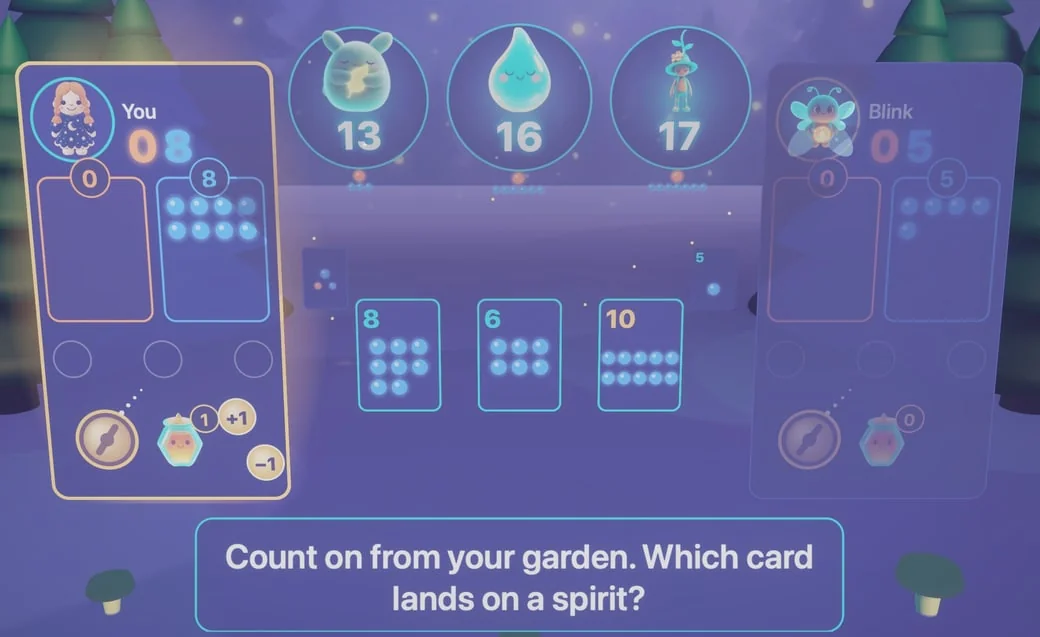
Every game hands the decisions to your child.
Each one starts from something worth learning, and the working out is left where your child can get at it. Here are three we're building.
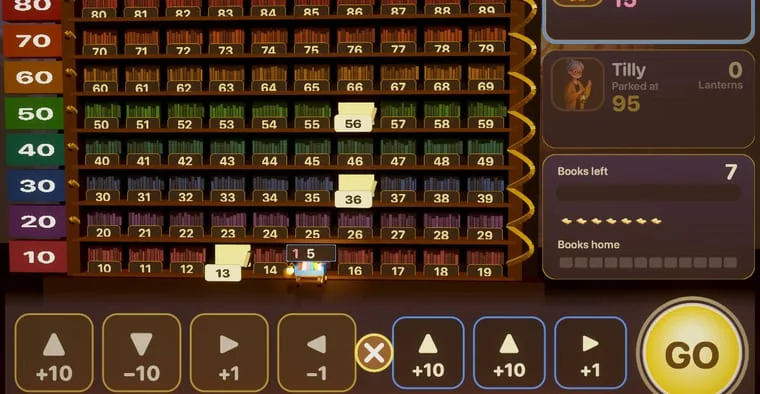
Your child plans the route, then runs it
The cart is parked at 15 and a book belongs on shelf 36. Your child picks three jumps from the tiles on offer, and nothing moves until they press GO. If the cart lands somewhere else, the plan is the thing to change.
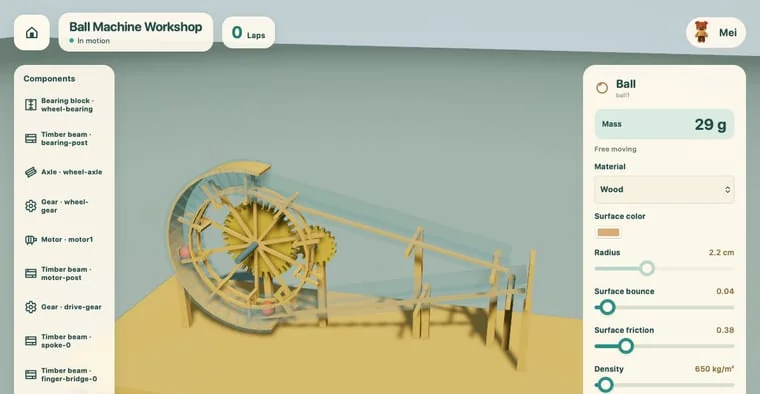
Your child builds it, then tunes it
The machine is made of named parts your child puts together: a wheel, an axle, a motor, a ramp. Then how each one behaves is theirs to change too. Move one thing, run it again, and watch what the ball does differently.
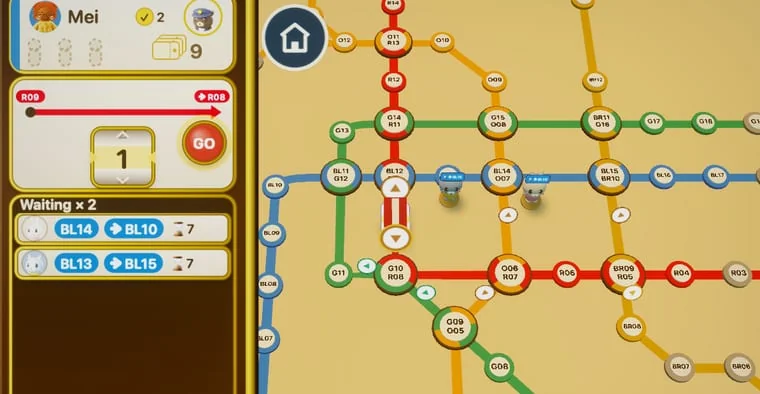
Your child decides where the train goes
Two passengers are waiting, each with a stop to reach. Your child picks a direction, counts how many stops to travel, and sends the train. If it stops short, that tells them something useful for the next go.
These are screenshots from our own builds, not a demo you can play in this browser. Wonderix is coming first to iPad.
A little character of their own.
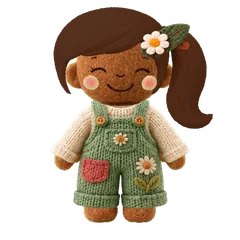
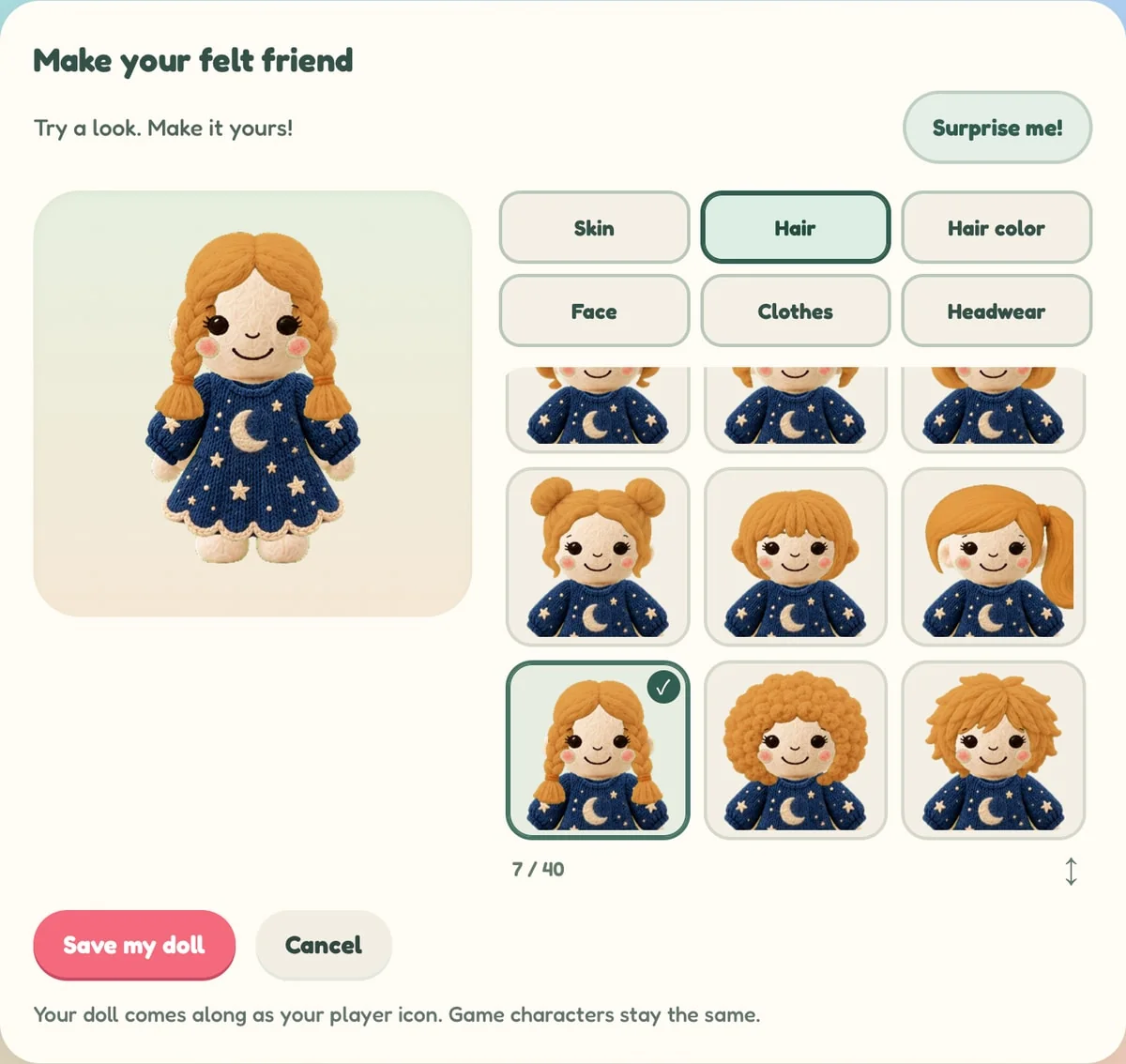
Choose a hairstyle, try a new outfit, or add a hat. Your child creates the felt doll that appears as their player icon, and can change its look whenever they like.



Try something. See what happens. Think again.
Your child decides what to try, watches what happens, and gets another chance to work it out.

Make a move
The game holds the goal. Your child decides what to try first, and there's more than one way in.

See what happens
The game answers every meaningful action, so the result of a choice is right there to look at.

Think again
Your child looks at what happened, compares, and can change their mind. We leave that moment alone instead of filling it with talk.

Get help only if it helps
When your child asks, or the same thing keeps not working, help arrives at the smallest useful size. While they're getting somewhere, we'd rather stay out of the way.
Room to choose
The game holds on to the learning objective so your child doesn't have to. What is left for them is the interesting part: which approach to take, what to try first, and what to do about the result.
Support that steps back
Not every move needs a comment. A child trying a new idea, or quietly fixing their own mistake, is already doing the work. We look at what happens across several moves rather than treating one tap as a cry for help.
These are the design principles we build to. The shape of support varies from game to game.
On the research: a 2022 meta-analysis of 33 studies (3,894 learners) found a moderate but significant benefit for digital learning games over ordinary instruction (International Journal of STEM Education). That is about game-based learning in general, not about Wonderix. We're pre-launch and haven't measured our own results yet.
The parts parents ask about first.
Every game is free to start. Wonderix is made for iPad with iPadOS 16.4 or later. Read about subscriptions, which iPad to use, languages, and where information is stored.
Every line written ahead of time
What a character says in a game is written and recorded ahead of time. Nothing is generated while your child plays, and there's no live chat with a character.

No one character to come back for
Different games have different characters, on purpose. We'd rather your child came back for the puzzle than for a face.

Gentle stopping points
Sessions wind down instead of stopping dead. Finishing today's play is the thing we celebrate, and putting it down is never held against your child.
Plain words for you
We'd rather tell you what your child worked on in one sentence you can read on the way to school, instead of a wall of points.

Be among the first to explore Wonderix.
We haven't launched yet. Parents and guardians can join the waitlist for updates and an invitation when access opens.
For parents and guardians. Please use a grown-up's email. Coming first to iPad. No spam, just a note when there's something to tell you. See our Privacy Policy.
The things parents ask first.
Is Wonderix free, and what does a subscription cost? +
Which iPad do we need? +
Which languages does Wonderix support? +
Where is my child's information stored? +
What is Wonderix? +
How is this different from other learning games? +
Does my child just get told the answers? +
Is this just another math app? +
What happens when my child gets stuck? +
Who is it for? +
Will my child get attached to a character? +
When can we play? +
Does game-based learning actually work? +
More for parents on the Wonderix blog.